


According to statistics, billions of people on the planet are carriers of parasites.The extent of the problem is primarily explained by the fact that most people cannot imagine that there are “free riders” in their bodies.Parasites can temporarily hide their presence in the human body from its attention until there are too many of them.For this reason, a person can be a carrier of various types of band and round parasites without knowing it.
Failure to treat a helminth infestation can lead to health and life-threatening complications.The presence of parasites in the human body leads to the development of all kinds of chronic diseases, which are caused primarily by the constant poisoning of the patient with waste products of the “settlers”.This is exactly what explains the spread of allergies among our contemporaries - in many cases, banal intestinal parasites are the cause of allergic reactions.
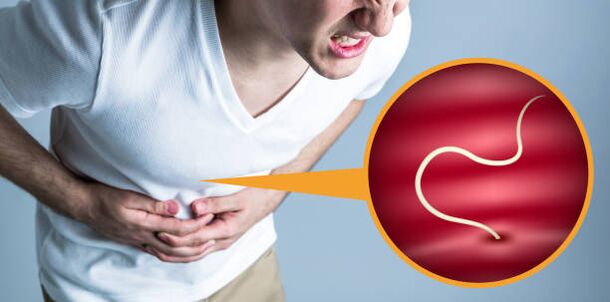
How do parasites get into the human body?
If someone knows how to become infected with pinworms, roundworms, tapeworms and other types of parasites, they can protect their health by taking a number of simple safety measures.There are the following routes through which parasites enter the body:
- inadequate hygiene – unwashed, especially – after using the toilet – hands, dirty vegetables, fruits and herbs;
- drinking untreated water or swimming in untested waters;
- insufficient heat treatment of fish - fresh water is particularly dangerous in this sense - or meat;
- contact with an infected animal, etc.
Symptoms of parasites
Of course, it happens that a person finds out about his infection with parasites by seeing the body of the parasite or its fragment after defecation in the toilet.However, this happens quite rarely.Much more often, the patient becomes aware of a worm infection based on the results of a stool examination.The following signs may indirectly indicate the presence of parasites in the human body:
- Symptoms of body intoxication – lethargy, drowsiness, nausea, vomiting, headache, irritability;
- allergic reactions – skin rash, swelling of mucous membranes, etc.;
- Change in body weight - weight loss or, on the contrary, excess pounds;
- frequent increase in body temperature to 37.5 - 38 degrees;
- anemia, including iron deficiency;
- Indigestion – constipation, diarrhea, increased gas production, abdominal pain and loud rumbling.Often they try to eliminate such symptoms by taking anti-dysbacteriosis drugs, which in this case are useless;
- increased desire for sweets etc.
If you notice similar signs in yourself or someone close to you, you should be aware that these may be symptoms of parasites.For diagnosis and, if necessary, treatment, contact a private clinic with good reviews.Specialists identify and treat various parasitic diseases quickly and effectively.
Treatment of parasites in a medical center
It is important to understand that there is currently no effective broad-spectrum anti-parasitic agent.Self-medication is also unacceptable for them, since strong drugs are used to kill parasites, which, if used incorrectly, can harm the patient's health.Only a qualified specialist with extensive experience can choose the ideal remedy for parasites and prescribe its exact dosage.